Current state of PET recycling in Mexico: generation, technologies, state gaps and future from a circular economy perspective
Analysis from the circular economy of the PET value chain in Mexico
DOI:
https://doi.org/10.82580/revateh.v3i3.56Keywords:
PET, mechanical recycling, circular economy, preforms, Mexico by state.Abstract
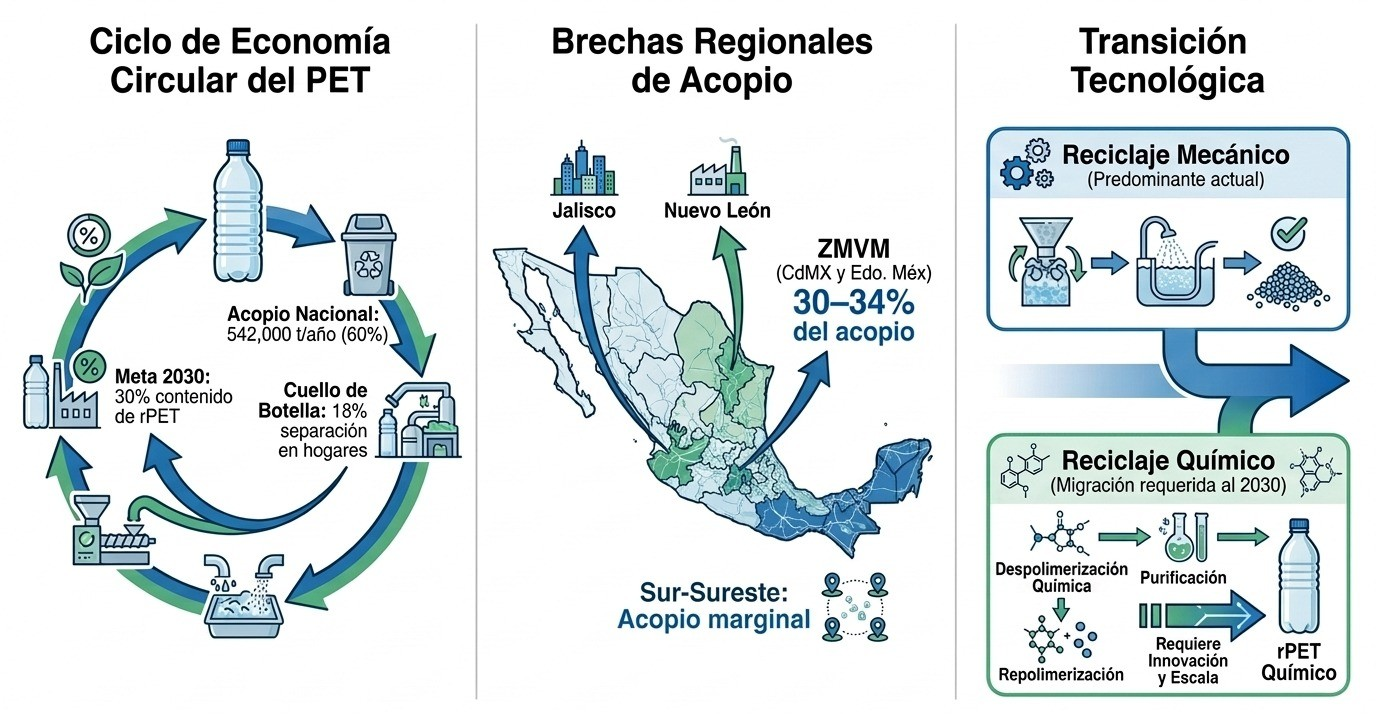
Polyethylene terephthalate (PET) is the most consumed packaging plastic in Mexico and, paradoxically, the one with the highest recovery rates in Latin America, exceeding 60% of post-consumer PET. This bibliographic review analyzes the state of PET recycling in Mexico from a circular economy perspective. The national generation of waste is quantified (over 542,000 tons collected annually), the recycling technologies applied are described —predominantly mechanical bottle-to-bottle recycling with world-class plants (PetStar, IMER)— and their technical limitations are identified (loss of intrinsic viscosity, acetaldehyde accumulation). The analysis by state reveals a high concentration of collection in the Metropolitan Zone of the Valley of Mexico (30-34%), Jalisco (10-12%), Nuevo León (9-11%), and the Puebla-Veracruz corridor (12-14%), while southern states such as Chiapas, Oaxaca, and Guerrero show marginal collection. The regulatory challenges (30% rPET targets by 2030) and technical opportunities to stabilize the quality of recycled resin in preforms are discussed. It is concluded that the success of PET recycling in Mexico no longer depends exclusively on increasing collection volumes but on resolving the technical bottlenecks in the preform injection stage and closing the regional gap